There is significant interest for novel male contraceptive methods and there is trust in male partner birth control use.
This nationally/regionally representative study was conducted in order to understand the demand for male contraceptives in 6 low and middle income countries (LMICs) in Asia and Africa that represent more than 50% of the unmet family planning need of FP2030 countries, plus the United States.
Executive Summary
The results of the study that there is significant interest for novel male contraceptives in 7 distinct markets across 3 continents:
A new male contraceptive technology (CT) would see interest from current users of modern contraception and new users (those who use traditional methods or do not use contraception). The introduction of a new male method could result in a substantial increases in Modern Method Contraceptive Prevalence Rate (mCPR) ranging from 14% to 46% depending on country.
The type of products men want (product attributes) varies by country:
Female partners were also surveyed: trust in male partner use of contraceptive is generally high alleviating a concern in the field that women would not trust male use.
The results of the study that there is significant interest for novel male contraceptives in 7 distinct markets across 3 continents:
- Africa: Côte d'Ivoire (a.k.a, Ivory Coast), Democratic Republic of Congo, Nigeria, Kenya
- Asia: Bangladesh, Vietnam
- North America: United States
A new male contraceptive technology (CT) would see interest from current users of modern contraception and new users (those who use traditional methods or do not use contraception). The introduction of a new male method could result in a substantial increases in Modern Method Contraceptive Prevalence Rate (mCPR) ranging from 14% to 46% depending on country.
The type of products men want (product attributes) varies by country:
- Form (how you take the contraceptive) emerges as the top decision-making criteria in all countries (by a long way); variation in preferred form by but country but less-invasive forms are clearly preferred.
- In the 4 African countries, protection against sexually transmitted infections (STI) is among the top 3 decision making criteria.
- Time to onset of action (how quickly the drug starts working) is important in most countries.
Female partners were also surveyed: trust in male partner use of contraceptive is generally high alleviating a concern in the field that women would not trust male use.
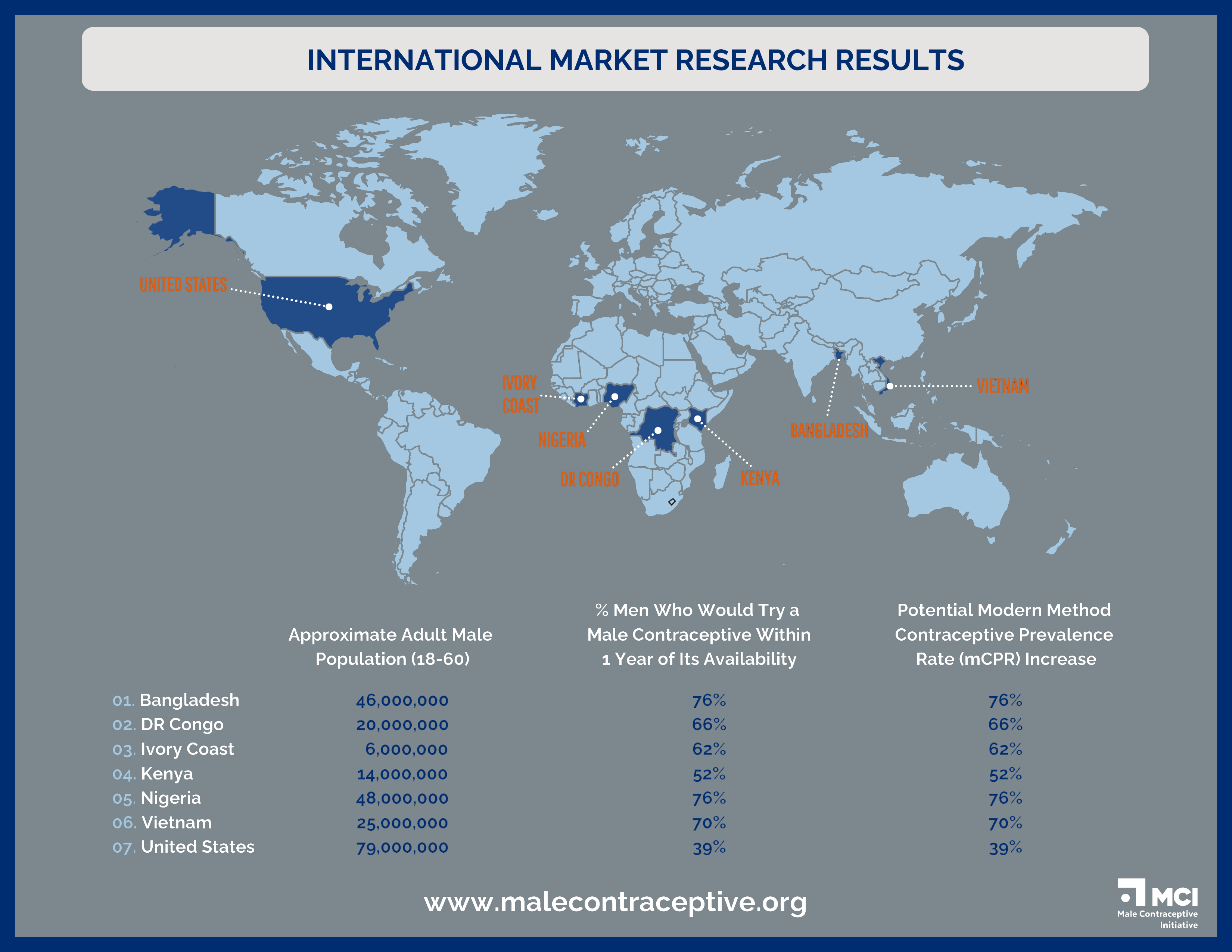
Results from the International Market Research Study
MCI's "Results from Global User Demand and Preferences for Novel Male Contraceptives Research"





Contact
For more information regarding this study, please reach out to us at [email protected] or fill out this contact form: