Developing non-hormonal, reversible contraception to provide options outside of vasectomy.
Our organizational focus is to provide funding and advocacy support to the research community diligently working to make new methods of non-hormonal, reversible male contraception a reality. On this page we will review current contraceptive options for sperm-producers, as well as outline what contraceptive methods are in development.
|
Family planning gives individuals and couples the ability to make informed decisions about the size and spacing of their families through the use of contraception. Unfortunately, current male birth control options are limited to vasectomy and condoms, leaving women to shoulder the responsibility of managing family planning goals.
Providing men with more contraceptive options would lead to a reduction in unintended pregnancies, improved economic stability for families and communities, a reduction of maternal and infant mortality rates, improved gender equality, and sustainable population growth. |
"Male Contraceptive Initiative Overview" Animated Video
|
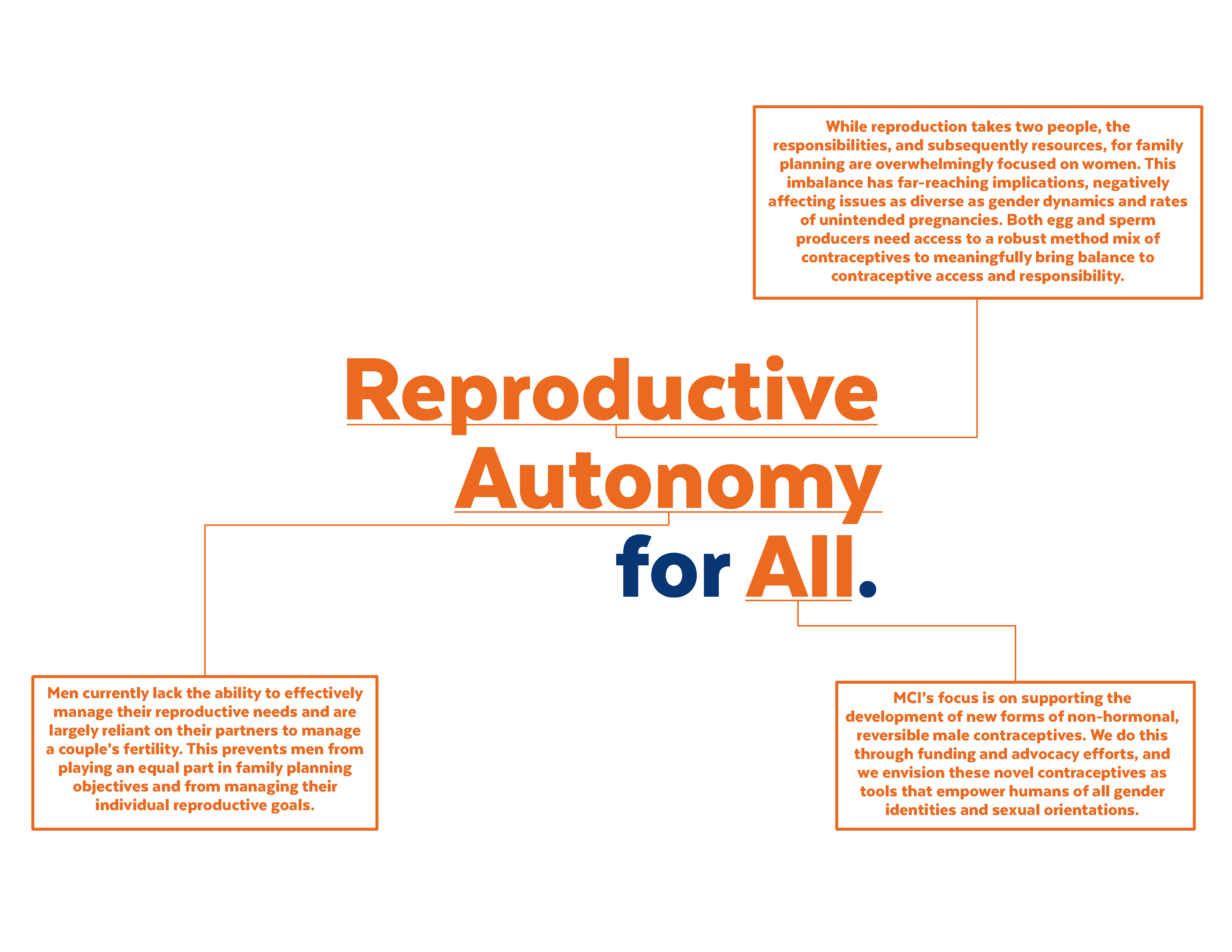
MCI's Vision (click the image for more details)
|
We support the development of new forms of non-hormonal, reversible male contraceptives through funding and advocacy efforts. By expanding the array of male contraceptive options, we hope to achieve “Reproductive Autonomy for All” in order to empower men and couples to share the responsibility of family planning and, ultimately, foster stronger, healthier relationships based on equality and mutual understanding.
|
Traditional Male Contraceptive Options
Vasectomy
|
Vasectomy is a surgical form of male birth control that provides permanent sterilization. Through a puncture or small incision in the scrotum, a provider locates the vas deferens to cut, tie, or seal in some way (e.g., cauterization) in order to prevent sperm from traveling through the reproductive system and entering into the urethra and, subsequently, prevent fertilization of a female egg through sexual intercourse.
It’s a safe and simple procedure that is intended to provide life-long, permanent protection against pregnancy. Vasectomy has few side effects or complications, and patients are able to resume typical sexual behavior within a short period of time without impact to sexual performance or libido. Some believe vasectomy to be reversible, but reversal is not guaranteed and becomes increasingly more difficult over time. Even if the procedure is effectively reversed, fertility rates may vary significantly. Because of its permanence, individuals opting for vasectomy should be certain about their family planning goals. Counseling and discussions with partners and healthcare providers are essential steps before making this choice. |
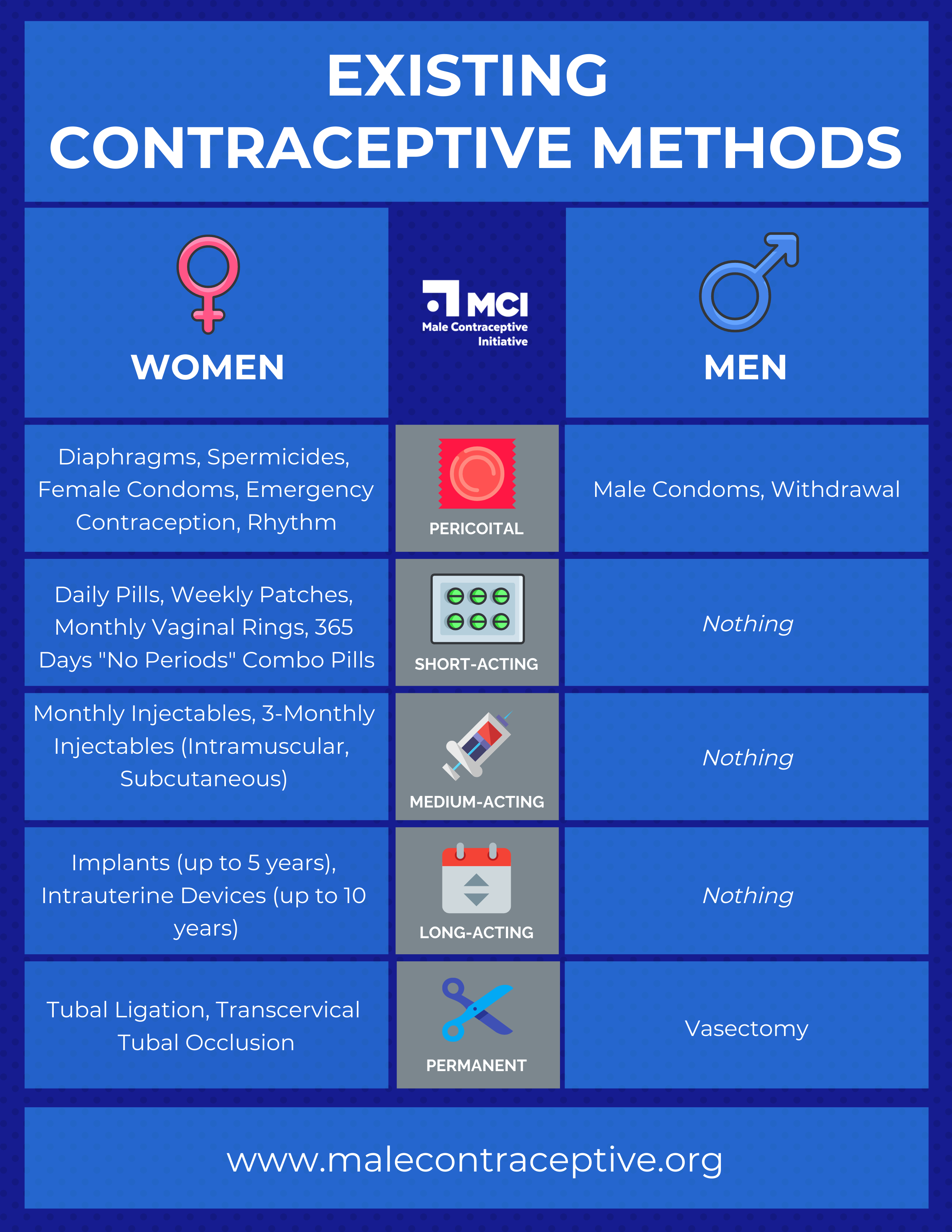
"Existing Contraceptive Methods" Infographic
|
Condoms
|
Condoms are currently the only form of reversible, non-hormonal contraception for men that also protect against sexually transmitted infections (STIs). A condom is a barrier device used during sexual intercourse to reduce the probability of pregnancy or a STI, and there are versions for both male and female users. A barrier device, or barrier method, is something that helps prevent pregnancy by blocking sperm from reaching and subsequently fertilizing the egg.
Condoms have limited side effects, are widely available, affordable, and relatively easy to use, making them accessible to people of all backgrounds. |
MCI's "Nuts & Bolts: 10 Facts About Vasectomy" Animated Video
|
They are sold over the counter in drugstores, supermarkets, and family planning clinics, and are often distributed for free by public health organizations to promote safer sex practices. With proper use—and use at every act of intercourse—women whose partners use male condoms experience a 2% per-year pregnancy rate. However, with typical use the rate of pregnancy is 18% per year. Correct application and removal techniques are essential to avoid tears or slippage.
Challenges & Limitations
Vasectomy
|
Vasectomy offers reliable and permanent contraception, therefore the decision to undergo vasectomy should be carefully weighed. This permanent loss of fertility may trigger emotional and psychological considerations, such as feelings of regret or loss of reproductive options, especially if life circumstances change.
Misconceptions and myths surrounding vasectomy can also pose challenges. Some individuals may fear that vasectomy will affect their masculinity or sexual performance, leading to misinformation that hampers informed decision-making. Dispelling these misconceptions and providing accurate information is crucial to ensuring individuals make well-informed choices. |
MCI's "Nuts & Bolts: Vasectomy" Animated Short
|
Condoms
|
MCI's "Nuts & Bolts: Condoms" Animated Short
|
While condoms are widely accessible and effective, they do come with challenges. Some users may experience discomfort or reduced spontaneity during intercourse, as they require proper application before engaging in sexual activity. Individuals also need to consider allergies to latex or other materials condoms may be made out of.
The effectiveness of condoms relies heavily on consistent and correct usage. Failure to use condoms properly, such as not ensuring proper fit, handling, or application, can result in breakage, slippage, or leakage, diminishing their contraceptive and STI protection efficacy. It's essential for individuals to educate themselves about proper condom usage to maximize their benefits. |
The Need for Alternative Male Contraception
|
The landscape of reproductive health is evolving, and with it comes a growing demand for a broader array of male contraceptive options beyond vasectomy and condoms. While these methods have long been staples of male contraception, their limitations display a need for additional methods that offer greater flexibility for diverse populations of users.
The introduction of diverse male birth control alternatives and therefore involving men more directly in family planning could challenge traditional gender norms, promote healthier relationships, and better foster gender equality. Such alternatives could empower couples to make joint decisions about contraceptive choices that align with their life stages, relationship dynamics, and desired family size. The development of male contraception extends impact far past individuals and couples. It could improve physical and environmental health, through its effect on the Sustainable Development Goals and can provide necessary contraception for members of the LGBTQIA+ community. |
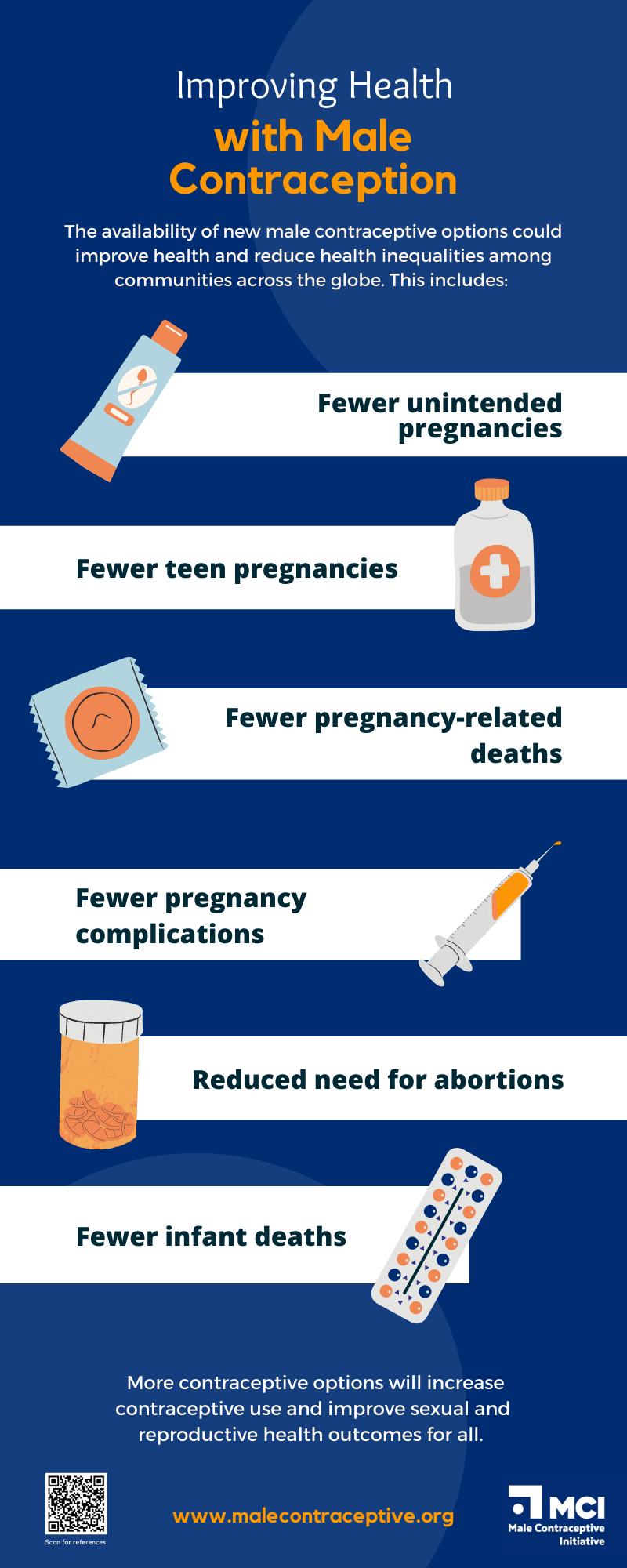
"Improving Health with Male Contraception" Infographic
|
Promising Non-Hormonal, Reversible Male Contraceptive Alternatives
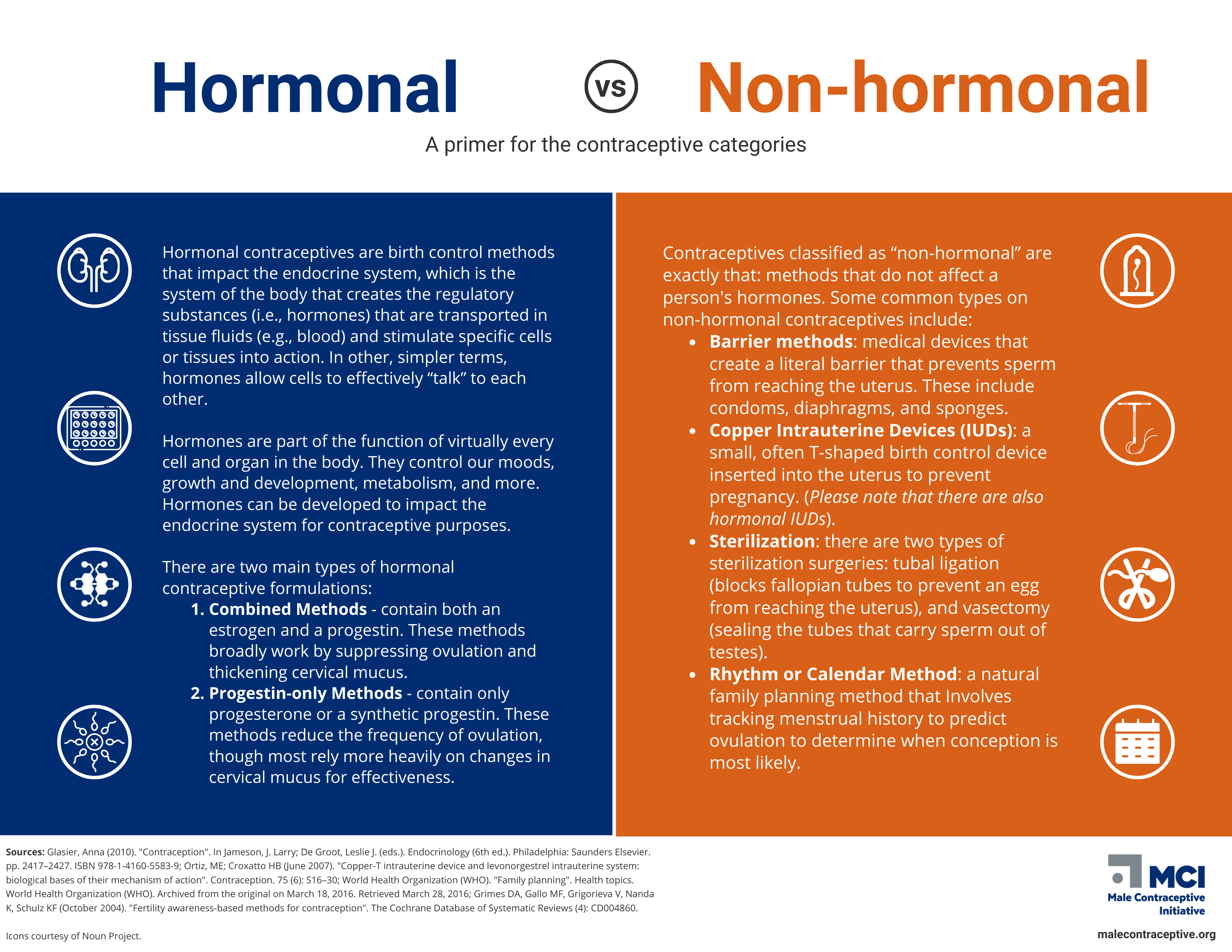
Hormonal contraceptives are birth control methods that impact the endocrine system, which is the system of the body that creates the regulatory substances (i.e., hormones) that are transported in tissue fluids (e.g., blood) and stimulate specific cells or tissues into action. In other, simpler terms, hormones allow cells to effectively “talk” to each other.
Hormones are part of the function of virtually every cell and organ in the body. They control our moods, growth and development, metabolism, and more. If your endocrine system is not functioning properly, it can lead to issues related to stress management, puberty, and even the ability to get pregnant. The latter of which explains why hormones can be developed to impact the endocrine system for contraceptive purposes.
Hormones are part of the function of virtually every cell and organ in the body. They control our moods, growth and development, metabolism, and more. If your endocrine system is not functioning properly, it can lead to issues related to stress management, puberty, and even the ability to get pregnant. The latter of which explains why hormones can be developed to impact the endocrine system for contraceptive purposes.
"Hormonal vs Non-hormonal Contraceptives" Infographic
Contraceptives classified as “non-hormonal” are exactly that: methods that do not affect a person's hormones. Some common types on non-hormonal contraceptives include:
- Barrier methods: medical devices that create a literal barrier that prevents sperm from reaching the uterus. These include condoms (the most common birth control method worldwide), diaphragms, and sponges.
- Copper Intrauterine Devices (IUDs): a small, often T-shaped birth control device that is inserted into the uterus to prevent pregnancy. (Please note that there are also hormonal IUDs).
- Outercourse: this refers to sexual acts where the penis doesn’t go into the vagina at all.
- Withdrawal: also known as the “pull out” method, this involves removing the penis from the vagina prior to ejaculation.
- Sterilization: there are two types of sterilization surgeries: tubal ligation, which blocks fallopian tubes to prevent an egg from reaching the uterus, and vasectomy, which involves sealing the tubes that carry sperm out of testes.
- Rhythm or Calendar Method: a form of natural family planning that relies on tracking menstrual history to predict ovulation to determine when conception is most likely.
|
These methods tend to have fewer side effects (e.g., headaches, nausea, depression, yeast infections, reduced sexual desire, etc.) than their hormonal counterparts and are not negatively impacted by interactions with other medical therapies (e.g., antibiotics). However, some of these methods, such as withdrawal and the rhythm method, have low efficacy, and might not provide reliable contraception. |
MCI's "Nuts & Bolts: Hormonal vs. Non-hormonal Contraception" Animated Video
|
Novel Non-Hormonal Contraceptiom
Non-hormonal pharmaceutical products are currently in development for both men and women. These products will allow users greater flexibility in delivery options (e.g. pills, injectables) similar to current hormonal contraceptive offerings, without the potential drawbacks associated with hormonal method use. These products are designed to prevent pregnancy using a more targeted approach, focusing on inhibiting the activity or developmental pathway of a specific cell (e.g. sperm cells). Due to the specific action of these products, the chance of “off-target” effects is reduced, ultimately resulting in few or no side-effects.
"Male Contraceptive Methods in Development" Infographic
|
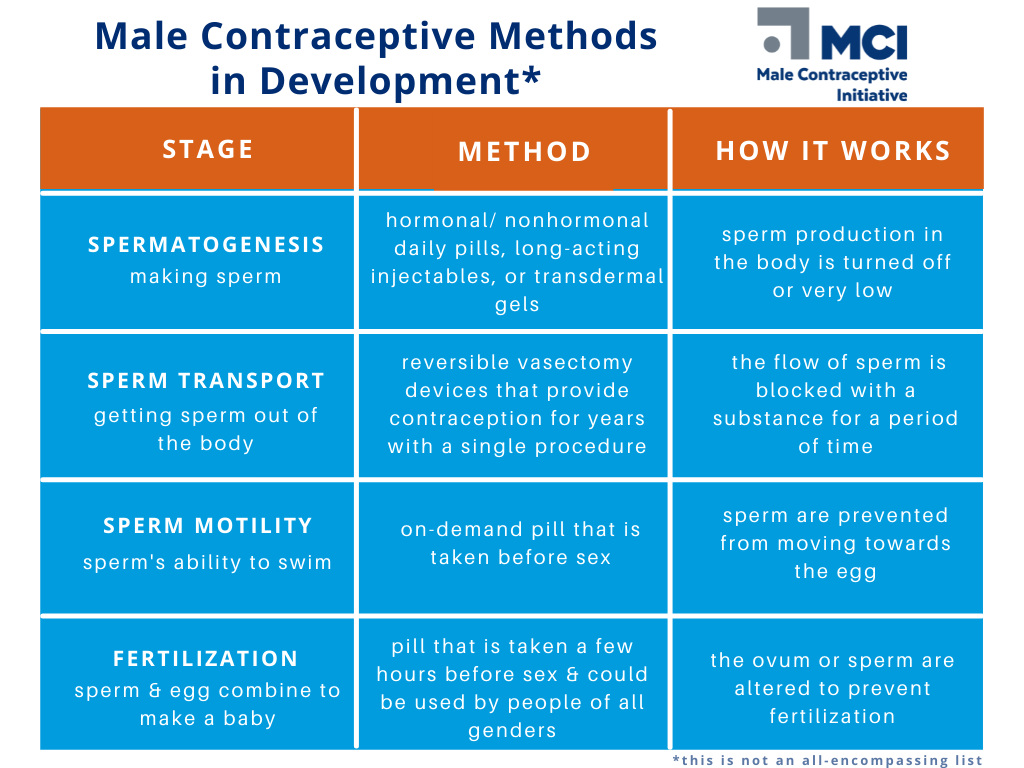
Here at Male Contraceptive Initiative, we focus specifically on the development of non-hormonal contraceptive options for men as we believe it’s time to provide reproductive autonomy for all in a form that is reliable, safe, and reversible. Novel non-hormonal male birth control alternatives transcend traditional methods as they focus on disrupting sperm production, transport, and function. New approaches include focus on disruption of spermatogenesis, sperm’s motility, devices that block sperm transportation through the vas deferens, or may alter sperm's ability to fertilize an egg. These pioneering mechanisms hold immense potential for providing effective, reversible male contraception without hormonal side effects, revolutionizing family planning with a diverse array of choices catering to individual preferences and lifestyles.
|
Progress & Research
We are committed to furthering the research and development of non-hormonal, reversible male contraceptive options, and offer support through scientific granting to a diverse portfolio of researchers. Our grantees work from the basic science all the way through the drug development pipeline to clinical trials to make the next generation of non-hormonal, reversible male birth control a reality.
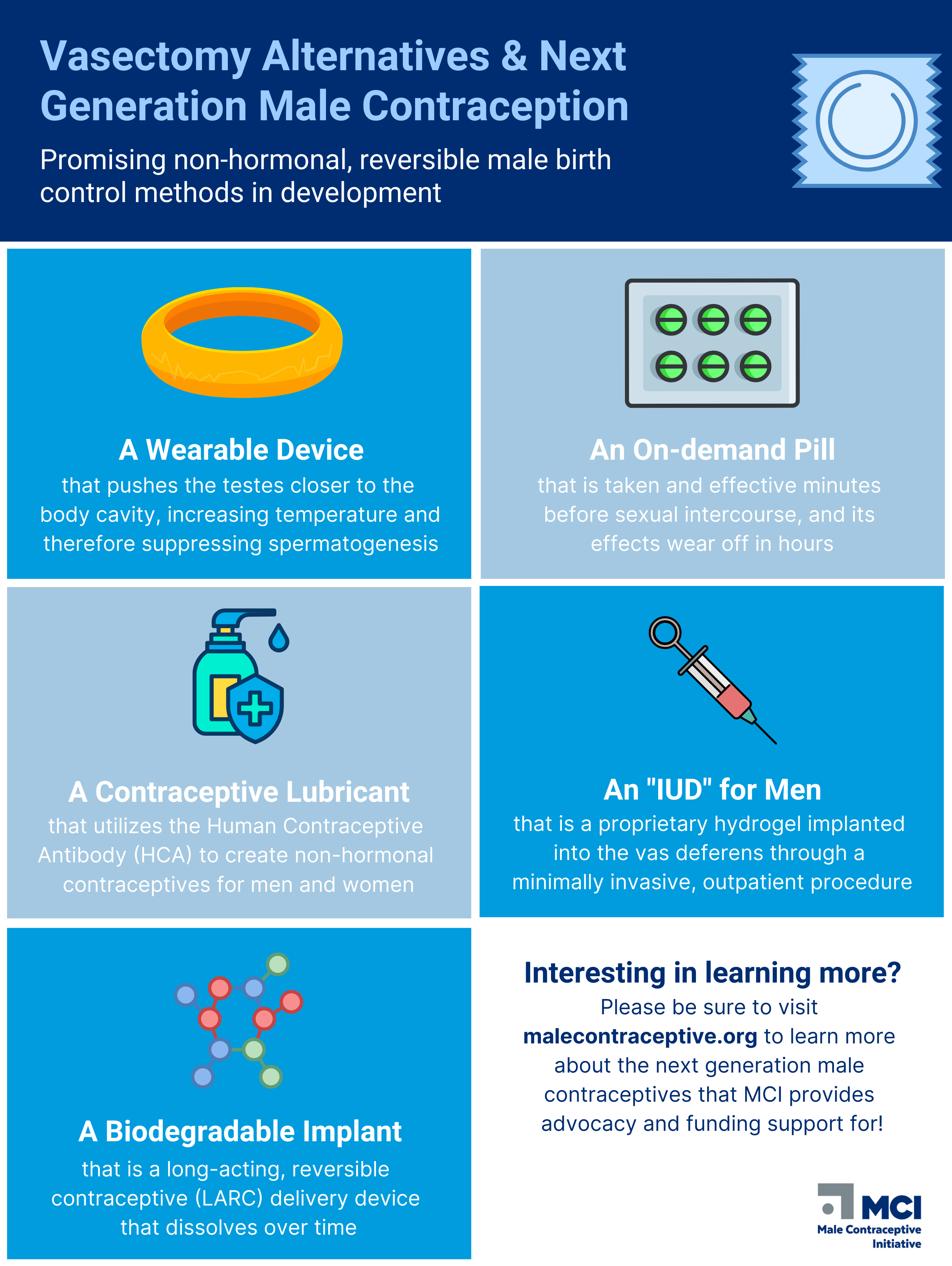
MCI provides funding and advocacy support for myriad different potential male contraceptives in order to ensure that a robust method mix is in development every step of the way. Through these efforts, we hope to ensure that the individual needs and interests of men and couples are catered to in order to ensure early adoption and continued use of these critically important, yet currently missing, family planning tools. These alternatives to condoms and vasectomy that researchers are working on now, include varied and diverse options.
MCI provides funding and advocacy support for myriad different potential male contraceptives in order to ensure that a robust method mix is in development every step of the way. Through these efforts, we hope to ensure that the individual needs and interests of men and couples are catered to in order to ensure early adoption and continued use of these critically important, yet currently missing, family planning tools. These alternatives to condoms and vasectomy that researchers are working on now, include varied and diverse options.
"Vasectomy Alternatives & Next Generation Male Contraception" Infographic
What are the male birth control research activities is MCI supporting?
The science of male birth control can be a little intimidating if you do not have a background in science. To counter this, we created this section to make the work we are supporting a bit more accessible to the general public.
A single injection that ensures a man cannot cause a pregnancy for years and is completely reversible.

|
Our grantee Contraline has invented a proprietary hydrogel called ADAM™ that is implanted into the vas deferens through a minimally invasive, outpatient procedure.
The hydrogel works by blocking sperm from traveling through the vas deferens. Similar to intrauterine devices (IUDs) for women, Contraline’s contraceptive is designed to last for years and be reversible. MCI’s support will be used by Contraline to prepare for filing with the FDA and initiating first-in-human trials. |
A reversible male birth control that impacts the head of the sperm, preventing it from fertilizing an egg.
|
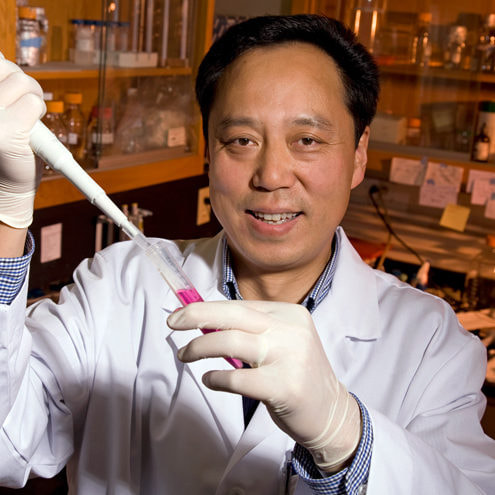
Our grantee Dr. Wei Yan and his team of researchers have developed a new compound derived from a Chinese herb called the Thunder God vine (Tripterygium Wilfordii Hook F).
The compound works by causing the head of sperm to be malformed such that they are not able to connect with and fertilize a female egg. This effect only occurs while the compound is consumed, and normal function is fully restored after discontinuing use. MCI’s support allowed Dr. Yan and his team to explore the effects of the compound and publish their results. Because of MCI’s grant, our sister organization Contraceptive Accelerator Network is performing nonclinical studies on Triptonide that advance it towards human studies. |

|
Our grantee Dr. Mario Buffone has been working in the field of sperm physiology for two decades. His lab seeks to understand the complex process of mammalian sperm capacitation, the change sperm undergo in the female reproductive tract that enables them to penetrate and fertilize an egg.
Dr. Buffone is working to screen and identify drugs that are able to prevent the capacitation and therefore render sperm incapable of fertilizing an egg. MCI is supporting the Buffone lab’s studies with the intent of moving towards in vivo preclinical studies. |
A biodegradable implant injected just below the skin’s surface that can deliver a male contraceptive over a sustained period of time.

|
Our grantee Dr. Rahima Benhabbour designs and fabricates delivery platforms for HIV prevention, cancer treatment, and contraception.
Dr. Benhabbour launched her first start-up AnelleO, Inc. in 2016, focusing on developing 3D-printed intravaginal rings for the treatment of infertility. MCI’s support will help facilitate studies that develop and implement an injectable device that can carry drug and translate into human studies. |
A daily, or even on-demand, method of male birth control that prevent sperm from being able to swim when taken.

|
Our grantee Dr. Gunda Georg’s group has published over 200 scientific articles on the design, synthesis, and evaluation of biologically active agents. In addition to male contraception, her lab investigates areas of cancer and female contraception.
Dr. Georg's lab has focused on investigating the testis-specific serine kinase (TSSK) family. These proteins are expressed after sperm have been developed, and are likely involved in multiple steps that could make them excellent contraceptive targets. MCI’s support will help Dr. Georg’s team investigate the sperm-specific isoform of Na,K-ATPase, which is crucial for sperm motility (e.g., sperm’s ability to swim). |

|
Our grantee Dr. Mike O’Rand is the President and Chief Scientific Officer of Eppin Pharma, named after the protein EPPIN which is a critical component of sperm development.
Dr. O’Rand is developing a compound called EP055, a small organic compound that that targets EPPIN on the surface of sperm and prevents sperm from swimming. MCI’s support will help support Dr. O’Rand Investigational New Drug (IND)-enabling milestones that are required for Eppin Pharma to begin the process of entering first-in-man studies for EP055. |
A reversible male birth control method that causes sperm to become sterile.

|
Our grantee Dr. Stephen L’Hernault and his lab have worked on spermatogenesis (i.e., sperm creation) and fertilization for over 30 years.
Dr. L’Hernault is working on developing compounds that can block the function of the IZUMO1 protein, which is required to fertilize an egg. MCI’s support will help Dr. L’Hernault’s team to identify small compounds that reversibly block the function of the IZUMO1 protein. |
A cohort of excited young researchers motivated by curiosity, ambition, and the social good associated with male birth control.
|
Our Fellowship program features a mix of graduate and postdoctoral trainees, all working towards creating non-hormonal, reversible male contraceptive methods.
Our Fellows work on a diverse portfolio of projects that help move the male birth control forward. Our support allows our distinguished Fellows to focus on the research, publish data, and build the background they need to sustain a long career as an investigator. |
An on-demand method of male birth control that you take just before sex.
|
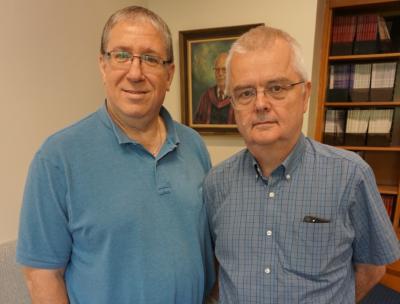
Drs. Lonny Levin and Jochen Buck are professors at Weill Cornell Medicine and are working on inhibitors of soluble adenylyl cyclase (sAC) as on-demand male contraceptives. Their deep expertise in sAC keeps them attuned to the effects of inhibitors on sperm functions such as motility.
MCI is supporting work that develops novel inhibitors of sAC as on-demand male contraceptives as well as translational research that assesses the pharmacodynamics of inhibitors on human sperm. These steps are crucial to understanding how the drug stays associated to sperm after ejaculation and its potential contraceptive efficacy. |
Get Involved
Your support is vital to advancing male contraceptive research and empowering reproductive autonomy for all. There are several impactful ways you can make a difference:
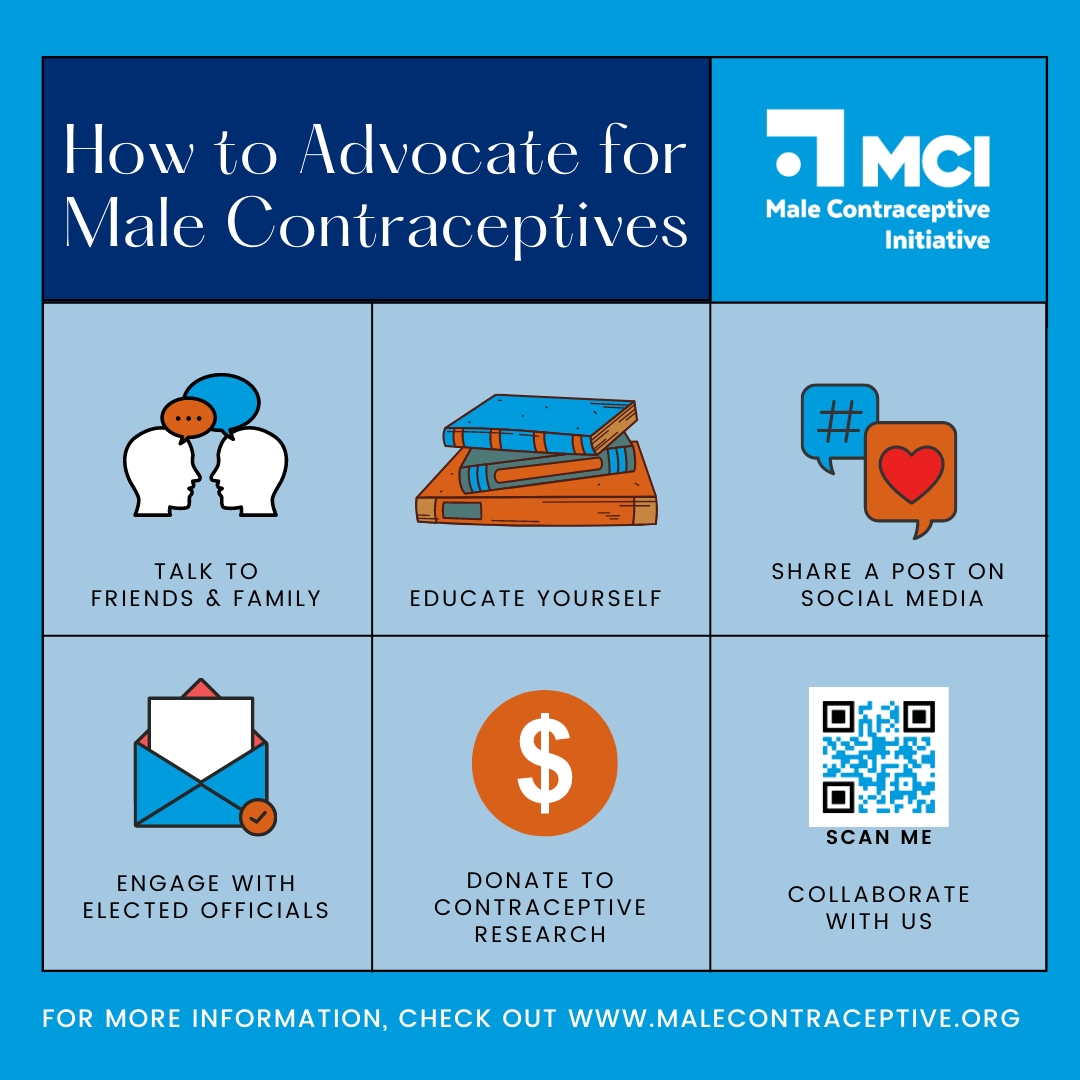
"How to Advocate for Male Contraceptives" Infographic
|
MCI's "Advocating for Male Contraception" Animated Video
|


|
Spread Awareness
You can play a significant role through advocacy efforts. Start conversations with friends or family about the importance of shared family planning responsibility. Share our webpage, infographics, videos, or other resources among your networks to educate others. |

|
Volunteer
As a small team, we welcome volunteers who are passionate about driving change. You might be interested in joining one of our youth initiatives, or taking a survey to share your perspective on male birth control. If you're interested in lending your skills, time, or expertise, please contact us! |
Your contribution, whether through donations, spreading awareness, or volunteering, strengthens our collective efforts to reshape family planning and create a future where diverse male contraceptive options are accessible to all. Join us in advocating for reproductive autonomy and playing a role in shaping a more inclusive and equitable world.
Frequently Asked Questions (FAQs)
About us
Male Contraceptive Initiative (MCI) is a 501(c)3 nonprofit whose objective is to advocate for and promote the development of reversible non-hormonal male contraception. MCI was founded in 2014 by a group of interested individuals who saw a philanthropic model as an innovative method to promote the development of male contraceptives. Since then, we have grown in scope and capacity, funding over $5M in research activities since our inception. Our Executive Board comprises experts in medicine, research, contraceptive development, and marketing, and we retain key advisors and stakeholders in the contraceptive research space.
MCI’s vision is “Reproductive Autonomy for All” and our mission is “To empower men, and couples, to fully contribute to family planning goals by providing them the resources they need for reproductive autonomy.”
We fund scientific studies, support early-stage researchers, and engage with the public on why male contraception will yield an advanced and as yet, unimagined modern landscape that:
We are funded through private donations from people like you. Join us on our journey to make “Reproductive Autonomy for All” a reality!
MCI’s vision is “Reproductive Autonomy for All” and our mission is “To empower men, and couples, to fully contribute to family planning goals by providing them the resources they need for reproductive autonomy.”
We fund scientific studies, support early-stage researchers, and engage with the public on why male contraception will yield an advanced and as yet, unimagined modern landscape that:
- Provides men with an option that is safe and reversible;
- Increases access and contraceptive choices for all;
- Enables informed choice about family growth and planning;
- Offers a complete menu of options for contraception;
- Fosters shared responsibility between spouses and partners;
- Reduces stress on the climate and environment; and
- Provides a solution for a heretofore unaddressed need
We are funded through private donations from people like you. Join us on our journey to make “Reproductive Autonomy for All” a reality!
What sort of products are in development?
Male contraceptives of the future can take a number of forms, with a wide range of product characteristics. This could be a daily pill, an implant, or even a coitally-dependent method that is taken only just before sex.
We like to think of male contraceptives in development as coming in three categories.
We like to think of male contraceptives in development as coming in three categories.
- Vas-occlusive devices. These can be likened to a vasectomy, and block the passage of sperm through the vas deferens. Unlike a vasectomy, these devices are intended to be reversible, and act long-term.
- Drug-based non-hormonal male contraception. This area is a very broad topic, and includes multiple targets with multiple mechanisms of action. Products could take the form of pills, implants, gels, or other modes of delivery. Depending on a number of factors, non-hormonal male contraceptives could potentially be short-acting, or quite long-acting, and there are many projects in development that span these diverse potential product characteristics. MCI focuses our funds on methods like vas-occlusive devices and drug-based non-hormonal approaches.
- Hormonal male contraception. This method uses administration of exogenous hormones to shut down sperm production, and is in active development with governmental and other support.

|

|
|

|
When will it hit the market?
Science has intended to get male contraceptives on the market for decades. Of the products currently in development, current estimates are 15-20 years away for a drug-based product and 5-10 years away for a device.
Listen to Intended, a new podcast from us where we discuss male contraception--learning from the past, talking to the researchers of the present, and the users of the future.
Listen to Intended, a new podcast from us where we discuss male contraception--learning from the past, talking to the researchers of the present, and the users of the future.
Why do you only support non-hormonal efforts?
Hormonal male contraceptives are currently in clinical trials, with support from the NIH and other funders. Non-hormonal male contraceptives are comparatively underfunded, despite offering a greater opportunity for innovation and methods that meet the needs of more users. MCI supports non-hormonal, early-stage research efforts, investing in the long-term to create an eventual menu of options for men and women that meet their lifestyle and individual needs. We believe that all methods of contraception are meaningful components of a continuum of reproductive care necessary to provide everyone with the autonomy to decide what’s best for them and when.
What happens with the research you fund?
MCI strives for transparency in all our efforts. Our grantees publish their results as Open Access so that the broader community can learn about the latest advances in male contraception. Consistent with our global mission, we also promote access to the eventual products for communities worldwide.
Will men actually use it?
|
There are multiple studies that show the majority of men are interested in male contraceptives, and want the ability to use them. MCI’s own research suggests a potential market of 17 million men in the United States alone. And that’s now – before there are any methods on the market at all. Once it becomes a normal conversation for men to be involved in contraception, we expect that more and more men will be interested.
|
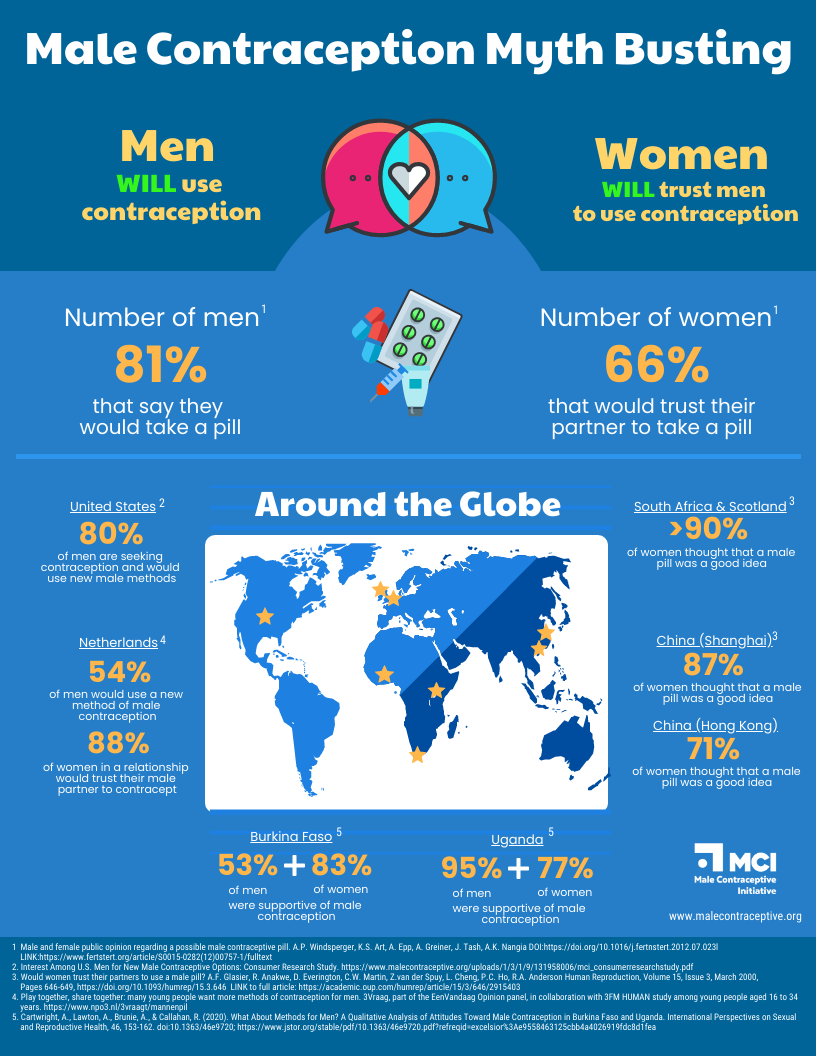
Male Contraception Myth Busting
|
Will women trust men to use it?
|
Male contraceptives will allow new options for couples who find the current landscape doesn’t meet their needs. In surveys, most women would trust their partner to use male contraceptives. Male contraceptives will add to the method mix, providing new options that allow men and women to contribute in whatever way they deem appropriate to contraceptive use. Those who wish to continue using current forms of contraception will still have that option, and each situation will be unique to the individual.
|
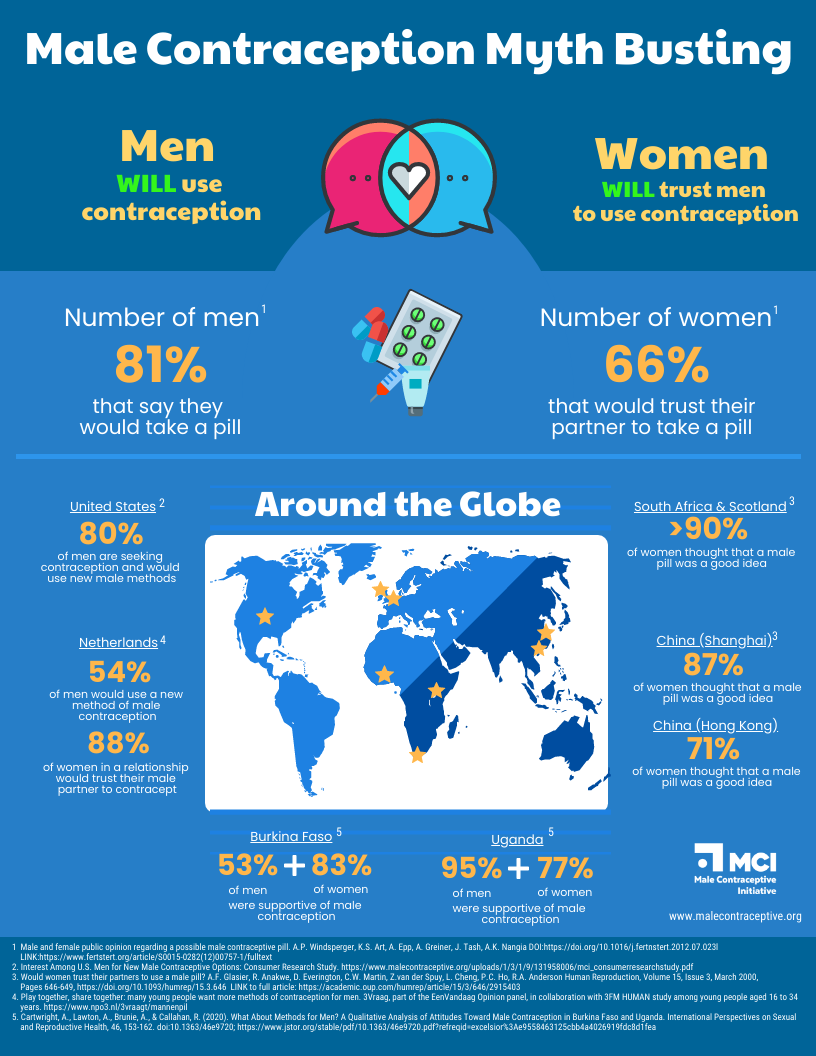
Male Contraception Myth Busting
|
Why has it taken so long?
|
The unfortunate saying goes – “Male contraception has been 10 years away for the past 50 years.” There are many reasons for these delays including scientific hurdles, financing, and public interest. However, the field is more exciting than it’s ever been. Research is progressing down previously unexplored pathways with new technological advances, and an increasingly vocal contingent of men and women are highlighting the need for new options.
Our podcast Intended investigates the past, present, and future of male contraception. Season 1 is currently available and its episodes provide details as to why we don’t yet have contraceptive methods for men beyond the condom and vasectomy. |
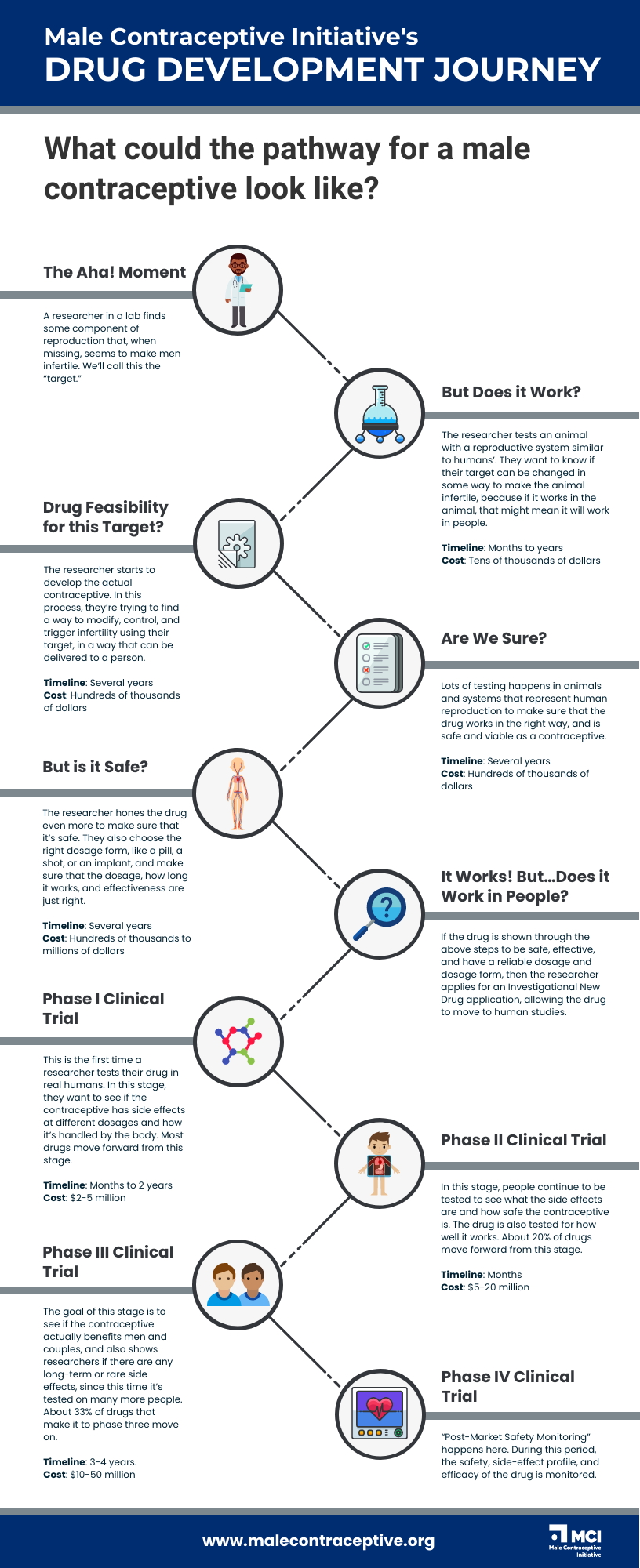
Drug Development Pathway
|
What are the biggest hurdles to making a male contraceptive?
First and foremost, funding. It can cost well over a billion dollars to get a drug all the way onto the market, and in an age where funding is scarce, male contraception rarely makes it to the top of the priority list. MCI pushes projects further along the pipeline to de-risk them and provide incentive for other funders to participate in the landscape.
Secondly, the regulatory pathway for male contraceptives is uncertain. These products will be unlike any other, and the steps required to ensure their safety and efficacy are yet-to-be determined. Male Contraceptive Initiative works with researchers and other stakeholders to clarify that regulatory path, and ask the important questions early. Other hurdles include the scientific challenges inherent in making a safe, reversible contraceptive that meets high clinical standards, and eventual policy issues in making it available for the consumer.
Secondly, the regulatory pathway for male contraceptives is uncertain. These products will be unlike any other, and the steps required to ensure their safety and efficacy are yet-to-be determined. Male Contraceptive Initiative works with researchers and other stakeholders to clarify that regulatory path, and ask the important questions early. Other hurdles include the scientific challenges inherent in making a safe, reversible contraceptive that meets high clinical standards, and eventual policy issues in making it available for the consumer.
What do you think about hormonal male contraception?
We’re very optimistic about hormonal male contraceptive trials, as they will allow men to participate in the family planning process in a way they haven’t been able to before. These eventual products will also create data about what men use, need, and enjoy about contraception, and shape how we guide the innovative products of the future.
Will male contraceptives offer STI / STD prevention?
Simply due to technology, first-generation male contraceptive products aren’t expected to offer sexually-transmitted infection / disease (STI) prevention. Multipurpose prevention technology (MPT) products are a class of products currently being researched to deliver contraception and varied combinations of HIV prevention and other STI prevention. We’re hopeful that innovative future products for men and women will find ways to incorporate these features.
Will women continue using their own contraception?
Many women use hormonal contraception for reasons other than preventing pregnancy. This is an individual choice for women to make on a case-by-case basis, considering their contraceptive needs, relationship, and other factors. We view contraception not as an “either, or” situation, but rather an “and” one: everyone should have access to the contraceptive methods they want and need. It is to everyone’s benefit that people have the tools and resources necessary to achieve their reproductive autonomy.
What are the differences between creating male and female methods?
|
There are lots of differences between developing male and female contraceptive options. Existing female contraceptives generally rely on using active pharmaceutical ingredients (APIs) that have already been approved by the Food and Drug Administration (FDA). This makes their approval and release easier, since much more is known about the safety and efficacy of the drug. Male options are yet to be developed, especially non-hormonal contraceptives. These drugs will need to be fully tested and vetted before they are allowed on the market.
In addition, biology is quite different. Female hormonal contraceptives generally work by preventing ovulation, thickening cervical mucus, and thinning the lining of the uterus. Male contraceptives will need to target the creation or maturation of sperm, it’s transport out of the male reproductive system, or it’s ability to swim to and fertilize an egg. These drastically different biological functions are complex, and need in-depth scientific study to understand how we might block them in a targeted, non-systemic way. |
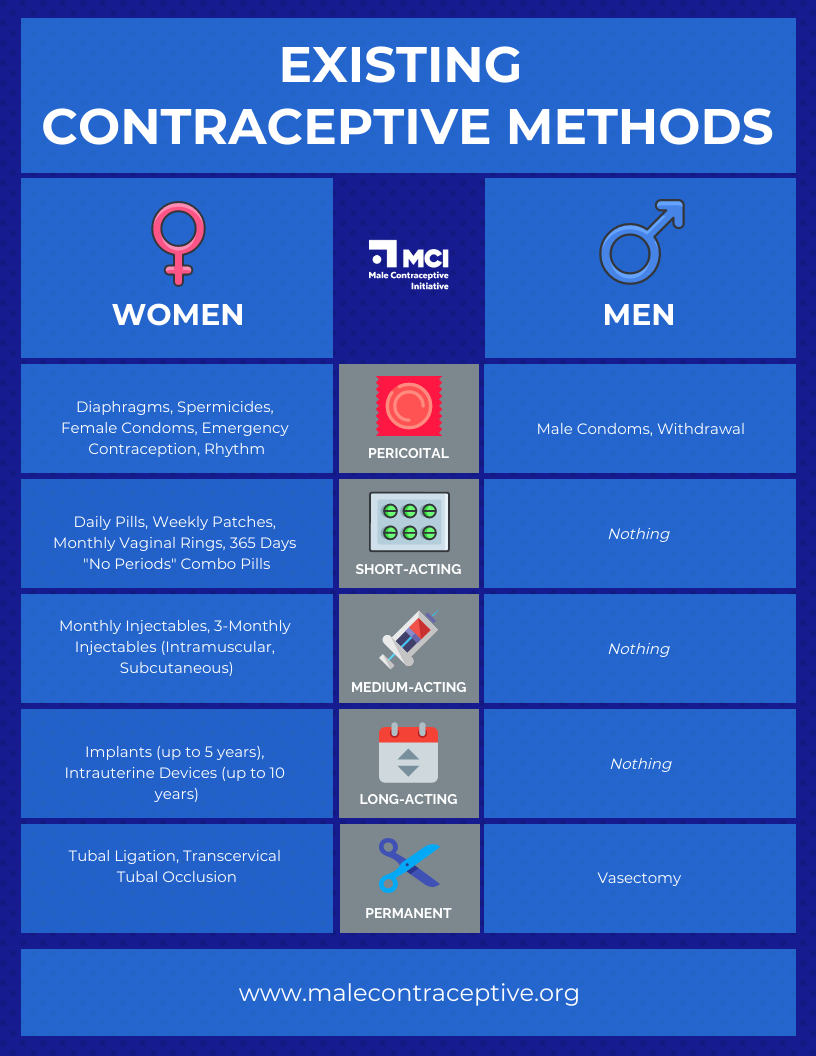
Existing Contraceptive Methods
|
How can I learn more about conferences and other events around the male contraception space?
We regularly update our Events page to provide you listings of local and international conferences and meetings. This page also gives you access to brief event descriptions along with logistical details. You can sign up for our newsletter to receive information on upcoming events.
Does Male Contraceptive Initiative have published works?
Male Contraceptive Initiative has completed several projects that have led to publication of scientific literature and in general media. Many of these studies and reports are self-published. We also highlight scientific articles that our grantees have published. These resources can be found on our Publications page.
Is there a place where scientific terminology and/or phrases are defined and explained further?
The Glossary provides you quick access to a collection of defined scientific terms and phrases. It also includes words from popular culture in reference to the male reproductive system. You can also visit our videos and webinars, as well as our blog for more in depth explorations of these concepts and terminologies.
Where can I sign up?
You can sign up for our newsletter below for updates on MCI. We’ll notify you of new ways you can participate in the creation of methods for men as we have them.
Is vasectomy reversible?
While vasectomy is intended to be permanent, reversal procedures are available but not guaranteed to restore fertility. Consider this decision carefully if you're uncertain about future family plans.
Does vasectomy affect sexual function or desire?
Vasectomy doesn't affect libido or sexual function. It only prevents the release of sperm during ejaculation. Sexual pleasure remains unchanged.
Is the vasectomy procedure painful?
|
Vasectomy is an outpatient procedure, usually done under local anesthesia, minimizing discomfort. Mild soreness might follow, but it's temporary.
|
MCI's "Nuts & Bolts: 10 Facts About Vasectomy" Animated Short
|
Do condoms provide protection against STIs?
Yes, condoms offer dual protection by preventing both unwanted pregnancies and sexually transmitted infections.
How effective at preventing pregnancy are condoms?
With “perfect use”, the effectiveness rate can be as high as 98%. The “typical use” effectiveness rate is usually somewhere between 82-90%. This means that couples relying solely on condoms for birth control can experience a pregnancy as often as once every five times they have sex.
Check the expiration date, handle with care, and ensure proper fit for proper efficacy.
Check the expiration date, handle with care, and ensure proper fit for proper efficacy.